18 December 2025
A300B4 Professional
Today we'll be looking at the considerable progress made this year on our upcoming classic, high-fidelity, wide-body airliner - the
A300B4 Professional for MSFS 2020/2024.
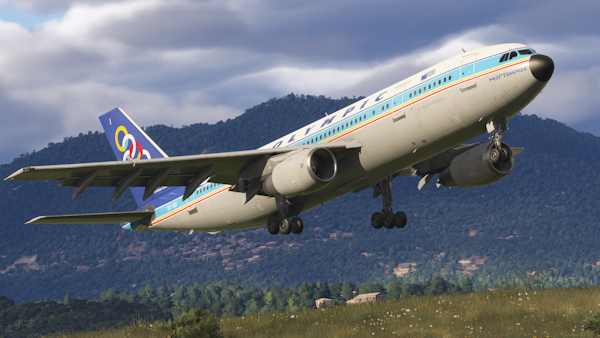
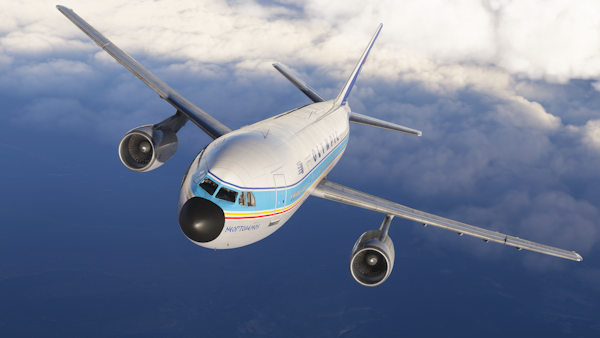
The big news is that after months of rivet-crunching work, our in-house artist is now extremely close to completing the exterior artwork. An aircraft of this size, created with this level of detail, is an enormous undertaking for any artist. The exterior textures are created at 8K resolution for pin-sharp texture quality, even at eye level during a pre-flight walkaround.
(You can click on the screenshots below to see an expanded image.)
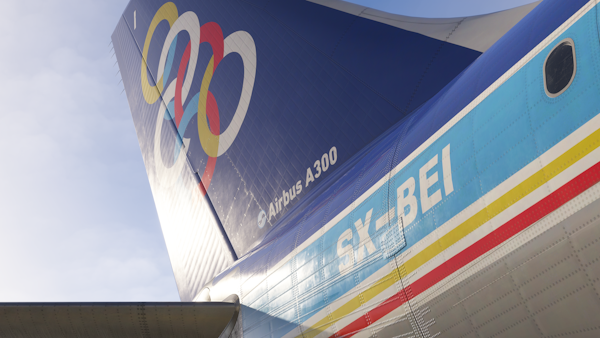
As you get up close to certain areas of the aircraft, it has the look of a very industrial machine. Thousands upon thousands of rivets have been meticulously hand-placed on every inch of the aircraft’s metal surface and this is most evident around the tail of the aircraft, which houses critical aircraft structure such as the rear bulkhead.
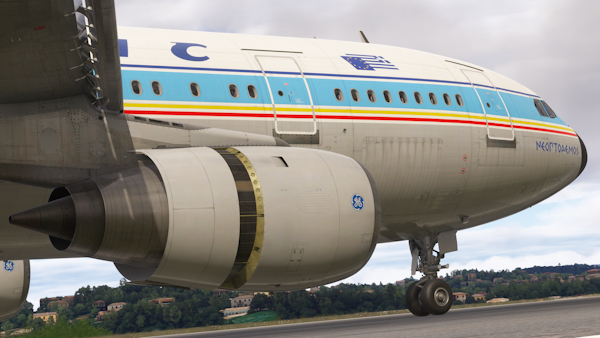
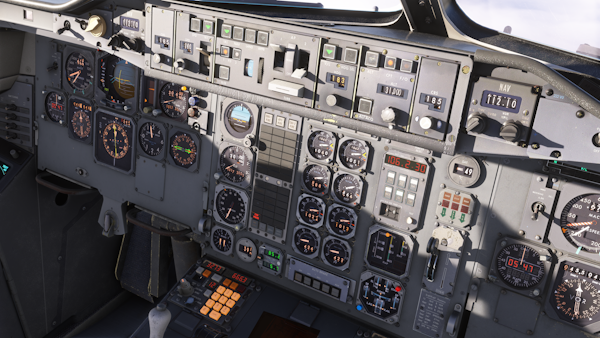
Of course, it wouldn't be a Just Flight aircraft if it didn't feature a realistic level of weathering. As with all our aircraft, we like to represent a machine that has been a workhorse for its operators - one that has been operating day and night, come rain or shine. Streaks of dirt and detritus that have been caught up in the airflow are visible on the aircraft’s surfaces, as well as traces of rain water than has run down panels from guttering or hinges, and even brake dust around the main landing gear doors. This all closely matches the feel of the cockpit artwork, which you can see in our previous A300B4 Professional development updates.
 We may be slightly biased, but we think this will be one of, if not the, most accurately represented wide-b
ody airliners in any flight simulator. We know that's a very bullish thing for us to say, so we'll let you be the judge!
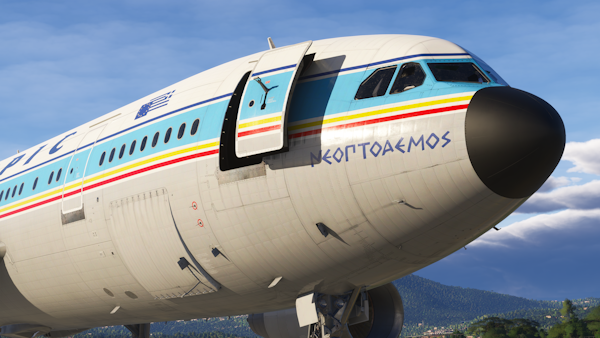
So, what work remains to be done on the aircraft exterior? Our artist is currently working on the textures of the landing gear, wheels and landing gear bays, before moving onto the cargo hold interiors - and that will be the artwork complete for the A300B4-203 variant. The eagle-eyed among you may notice that the livery shown in today’s screenshots actually belongs to the A300B4-103, and yes - that does mean other variants of the A300B4 will be included, including freighters. We're not ready to show any of the other planned variants just yet, so we will save those for a future development update.
Once the exterior texturing is complete, we can move on to livery creation. There are so many classic liveries that have adorned the A300B4 throughout its service life, and we have had great difficulty narrowing down the list to try and keep things achievable. Nevertheless, we promise to provide a large selection of top-quality liveries which represent the aircraft’s diverse range of operators from every habitable continent (sadly we couldn't find any record of Antarctic A300 operations!).
As regards the interior, we can share our first proper glimpse into the A300's vast cabin, which we have modelled in a two-class layout, straight out of the 1980s. The First Class cabin has 24 seats arranged in a 2+2+2 configuration, and the Economy cabin has 230 seats in a 2+4+2 configuration, which narrows at the rear to 2+3+2. The very noticeable incline in the rear section of the cabin is also modelled, with this incline taking up the entire aft cabin section in the A300B4, as opposed to the more modern aircraft types that share the same basic A300 fuselage.
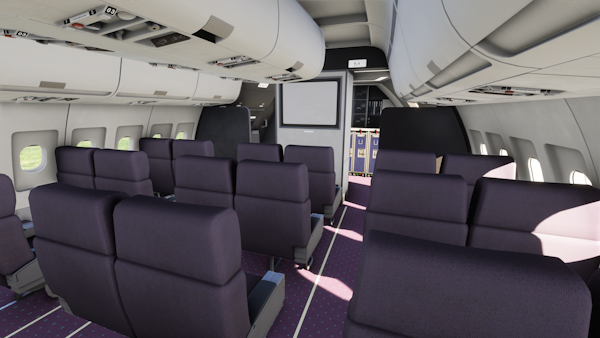
As is the case with our other MSFS aircraft, the cabin will have plenty of simulation in the galley areas, so you will have lots to play with if you want to stretch your legs on a medium- or long-haul flight.
The cabin artwork is complete but currently in testing, so there will be minor changes between what you see here and the final release, most notably in the cabin lighting; this is not yet implemented in these screenshots, with the cabin currently illuminated via the ambient light entering through the cabin windows.
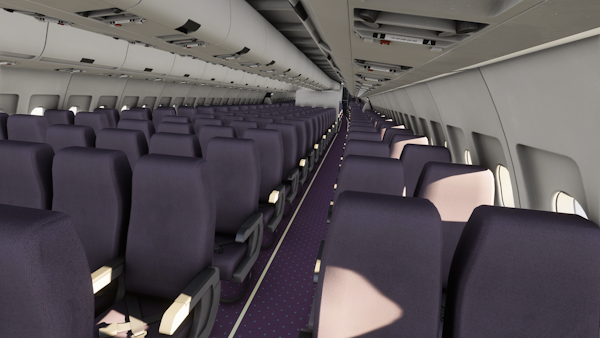
Pending final changes to the complete aircraft artwork, we can now turn our attention to the remaining areas of the flight model, sound set and systems coding.
The flight model is progressing very well, and the extensive data we have sourced for a variety of A300B4 variants has proven to be extremely useful in getting the aircraft to perform as faithfully to the numbers as possible. Work on the sound set is due to start soon.
The systems coding is the heart of the aircraft, as most of the time you spend in the aircraft will be interacting with the abundance of switches in the A300B4's three-position flight deck. Don't let the A300 name fool you - this is very different from operating a modern A3XX aircraft!
In our previous development update we briefly talked about the sheer depth of simulation our system coding is achieving with the A300, including simulating the variances in fuel pump efficiency between each fuel tank - the level of simulation that can only be accomplished by coders who are airline pilots themselves.
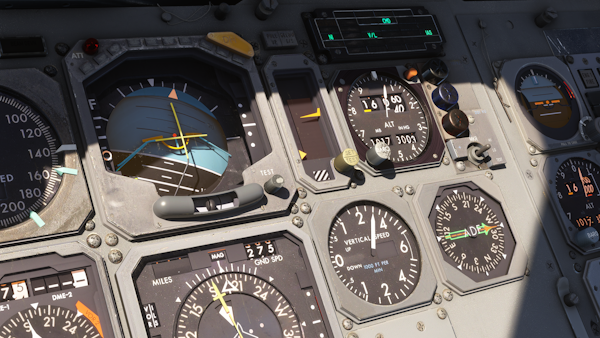
All the aircraft systems have now been fully coded, and the aircraft is being prepared to enter wider testing. The most recent tasks completed are the fully custom-coded navigation systems, which include a Carousel IV-A Inertial Navigation System (CIVA INS), and the autopilot logic.
Now that we have an almost complete aircraft, we can begin an intensive testing period that involves diving deep into every one of the A300's systems and cross-checking their functionality against the aircraft’s FCOMs. There will be constant refinements made to systems' interoperability, in particular how the autopilot behaves with the other navigation systems, and the flight model.
Our lofty ambitions for the A300B4 Professional are quickly becoming a reality and we can't wait to share more with you as development continues at pace into the new year.
In the final instalment of our End of Year Round Up tomorrow we'll be taking a look at two more of our aircraft which are currently in development.